 Government free to rifle through records at will. Remember when government needed something called a warrant or even probable cause to look at your records? Good times, good times.
I’m nostalgic for the halcyon days of, er, February of this year,
before the Attorney General of the United States signed off on an order
allowing the ... MORE
Government free to rifle through records at will. Remember when government needed something called a warrant or even probable cause to look at your records? Good times, good times.
I’m nostalgic for the halcyon days of, er, February of this year,
before the Attorney General of the United States signed off on an order
allowing the ... MOREEd Morrissey: Probable Cause No Longer Required
Government free to rifle through records at will. Remember when government needed something called a warrant or even probable cause to look at your records? Good times, good times.
I’m nostalgic for the halcyon days of, er, February of this year,
before the Attorney General of the United States signed off on an order
allowing the ... MOREOpposing Out-Of-Control Government Spying
 by Andrew Napolitano. After President Richard Nixon
was forced from office in 1974, congressional investigators discovered
what they believed was the full extent of his use of the FBI and the CIA
to engage in domestic spying. In that pre-digital era, the spying
consisted of listening to telephone calls, opening mail, and using
undercover agents to ... MORE
by Andrew Napolitano. After President Richard Nixon
was forced from office in 1974, congressional investigators discovered
what they believed was the full extent of his use of the FBI and the CIA
to engage in domestic spying. In that pre-digital era, the spying
consisted of listening to telephone calls, opening mail, and using
undercover agents to ... MORERoss Kaminsky: Death By A Thousand Regulatory Cuts
 Prepare for the worst. The public debate over the “fiscal cliff,” the combination of
automatic spending cuts and tax rate increases that our nation is
about to careen into in 2013, started the same way Republicans
always begin following an electoral setback: badly. John Boehner
seemed to be negotiating with himself, and conservative pundit ... MORE
Prepare for the worst. The public debate over the “fiscal cliff,” the combination of
automatic spending cuts and tax rate increases that our nation is
about to careen into in 2013, started the same way Republicans
always begin following an electoral setback: badly. John Boehner
seemed to be negotiating with himself, and conservative pundit ... MOREVIDEO: How The Constitution Was Destroyed
Judge Napolitano discusses the influence of Teddy Roosevelt and Woodrow Wilson.
How Much Taxation Would Fund Current Spending?
 by Justin Hohn. To best understand this spending aspect of the current budget negotiations in Washington, we must answer one crucial question: how much taxation on the top income-earners would be required to fully fund the present level of government spending? To do so, we must first make the unreasonable assumption that the rich will not respond ... MORE
Who Benefits From The Mortgage Interest Deduction?
 by Anthony Randazzo & Dean Stansel. The federal income tax code is riddled with loopholes, deductions, and credits designed to promote various social goals and benefit assorted groups of Americans. One of the largest of these is the mortgage interest deduction (MID), which allowed taxpayers to claim benefits of $82.7 billion in ... MORE
Philly Court Strikes Blow Against Asset Forfeiture Regime
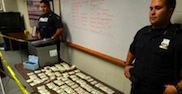
by Eric Boehm. A Commonwealth Court ruling is being hailed as a victory for property rights and a small blow against civil asset forfeiture laws, which allow the state to seize private property that may be connected to a crime. In a
decision filed last month, Commonwealth Court Judge Dan
Pellegrini called the state’s civil asset ... MORE
Nullification - An Overview Of Its Many Forms
 by Benjamin W. Mankowski Sr. In the nullification movement, there are varying degrees and methods of nullifying certain federal acts. One who has been with the movement a while could forget and hyper focus on one, leaving someone new to the movement to think of nullification as a very narrow spectrum. To eliminate that ... MORE
ObamaCare's Cruel War On Patient-Centered Healthcare
 by Sally Pipes. In just a few weeks, when the calendar flips to 2013, millions of Americans will get their first taste of Obamacare — a $2,500 cap on their flexible spending accounts. That’s down from the previous $5,000 cap — and thus equivalent to a tax hike for any family that had been putting more into their FSAs to cover out-of-pocket healthcare expenses. ... MORE
John Stossel: Government Gone Bad
 A problem that thinks its a solution. Politicians claim they make our lives better by passing laws. But laws rarely improve life. They go wrong. Unintended consequences are inevitable. Most voters don't pay enough attention to notice. They read headlines. They watch the Rose Garden signing ceremonies and hear the pundits declare that ... MORE
Jimmy Carter Says Marijuana Should Be Decriminalized
 by Nick Wing. Former President Jimmy Carter gave a full-throated endorsement of state efforts to legalize marijuana during an appearance at a CNN forum aired on Tuesday. Carter, who as president supported an era of marijuana
decriminalization in the mid-1970s, told CNN's Suzanne Malveaux that he
was "in favor" of states that were taking steps ... MORE
by Nick Wing. Former President Jimmy Carter gave a full-throated endorsement of state efforts to legalize marijuana during an appearance at a CNN forum aired on Tuesday. Carter, who as president supported an era of marijuana
decriminalization in the mid-1970s, told CNN's Suzanne Malveaux that he
was "in favor" of states that were taking steps ... MOREEd Morrissey: You Have The Right To Not Pay Union Dues
 Union dues are not an entitlement. The battle between unions and state governments continued this week — just as it has for the last two years — in territory normally considered friendly for labor organizations. In the winter of 2011, Wisconsin forced an end to mandatory union contributions for state employees — and conservatives ... MORE
Gene Healy: Homeland Security Grants Subsidize Dystopia
 The war on terror has come home. "Do I think al Qaeda is going to target Pumpkin Fest? No, but are there fringe groups that want to make a statement? Yes." That's the police chief of Keene, N.H. (pop. 23,000), justifying his decision to buy a BearCat armored personnel carrier with a federal Department of Homeland Security grant. After all, you ... MORE
Thomas Sowell: Taxing The Poor
 How the poor are made to pay. With all the talk about taxing the rich, we hear very little talk
about taxing the poor. Yet the marginal tax rate on someone living in
poverty can sometimes be higher than the marginal tax rate on
millionaires. While it is true that nearly half the households in the country pay
no income tax at all, the ... MORE
How the poor are made to pay. With all the talk about taxing the rich, we hear very little talk
about taxing the poor. Yet the marginal tax rate on someone living in
poverty can sometimes be higher than the marginal tax rate on
millionaires. While it is true that nearly half the households in the country pay
no income tax at all, the ... MOREWalter E Williams: Government-Created Financial Crisis
 Suppose you saw a building on fire. Would you seek counsel from the
arsonist who set it ablaze for advice on how to put it out? You say,
"Williams, you'd have to be a lunatic to do that!" But that's precisely
what we've done: turned to the people who created our fiscal crisis to
fix it. I have never read a better account of our doing just that than
in John A. ... MORE
Suppose you saw a building on fire. Would you seek counsel from the
arsonist who set it ablaze for advice on how to put it out? You say,
"Williams, you'd have to be a lunatic to do that!" But that's precisely
what we've done: turned to the people who created our fiscal crisis to
fix it. I have never read a better account of our doing just that than
in John A. ... MOREWill Congress Rein In Warrantless Spying On Americans?
 Congress has a brief chance to pass key reforms. The US government's warrantless surveillance powers largely remain a mystery, even to most of the members of Congress who are set to reauthorize them this week. A small group of senators, however, is planning to introduce a handful of amendments to the Foreign Intelligence Surveillance ... MORE
Subscribe to:
Comments (Atom)